

October 30, 2026
Importing replacement phone batteries: what to confirm with your broker
Buyers in Europe and North America often treat the import step of a battery order as paperwork that happens after the goods are chosen. In practice the import is where the terms of the purchase meet reality: what the goods are called on the way through customs, who is the importer of record, which document set travels with the shipment, and what happens if the parcel is inspected. Getting these answers before the invoice is signed makes the difference between a landed cost you can calculate and a landed cost you discover later.
This guide is written for wholesale buyers and importers of replacement phone batteries. It sets out the questions to put to your customs broker and freight forwarder, the documents to ask the supplier for, and the record to keep afterwards. It does not state duty rates, customs classifications or tax treatment: those depend on the goods, the route and the destination, and they have to be confirmed in writing by the parties who are responsible for them.
Four terms that decide who is responsible for what
| Term | What it decides | Question to ask in writing |
|---|---|---|
| Importer of record | Who is named on the import declaration and who is liable for the duties and taxes on arrival | Is my company named as importer of record, and what does that oblige me to do? |
| Incoterm | Where responsibility transfers and who arranges carriage, insurance and customs clearance | Which Incoterm is quoted, and where exactly do the costs and risks change hands? |
| Shipment terms | Whether the supplier arranges carriage and clearance on your behalf, or you take the goods from the origin | Is this shipment delivered duty paid, or is clearance on my side with my broker? |
| Valuation basis | What value is declared for the goods and what the landed cost adds up to | What value will be declared, and which costs are inside it and which are on top? |
Get these four in writing before ordering, not on the invoice. The wholesale RFQ template has a place to record them, so the same scope goes to every supplier you quote and the answers can be compared line by line.
The document set to request with the quotation
The useful time to collect documents is while you are comparing suppliers, because a supplier that answers these questions in writing is usually the supplier that can also answer them when a parcel is opened. The set below is short on purpose.
| Document or item | Why the importer needs it | Ask the supplier for |
|---|---|---|
| Commercial invoice | Sets out the goods, the value and the seller for the declaration | A draft invoice showing model codes, quantities, unit values and the total |
| Packing list | Supports the line count and the weights when the parcel is received | A packing list per carton with model codes and net and gross weight |
| Transport document | Shows what was actually shipped and how it is tracked | The bill of lading or airway bill reference, plus the tracking number |
| Description of the goods | The wording used for classification should be consistent across the whole document set | The exact product description, battery type and label values used on the invoice |
| Handling and storage statement | Supports the carrier and forwarder requirements for lithium batteries | The statement covering handling, storage and temperature, written and versioned |
| Batch or lot reference | Lets a receipt be tied to what was shipped and to what was invoiced | A lot or batch reference per shipment that can be recorded on receipt |
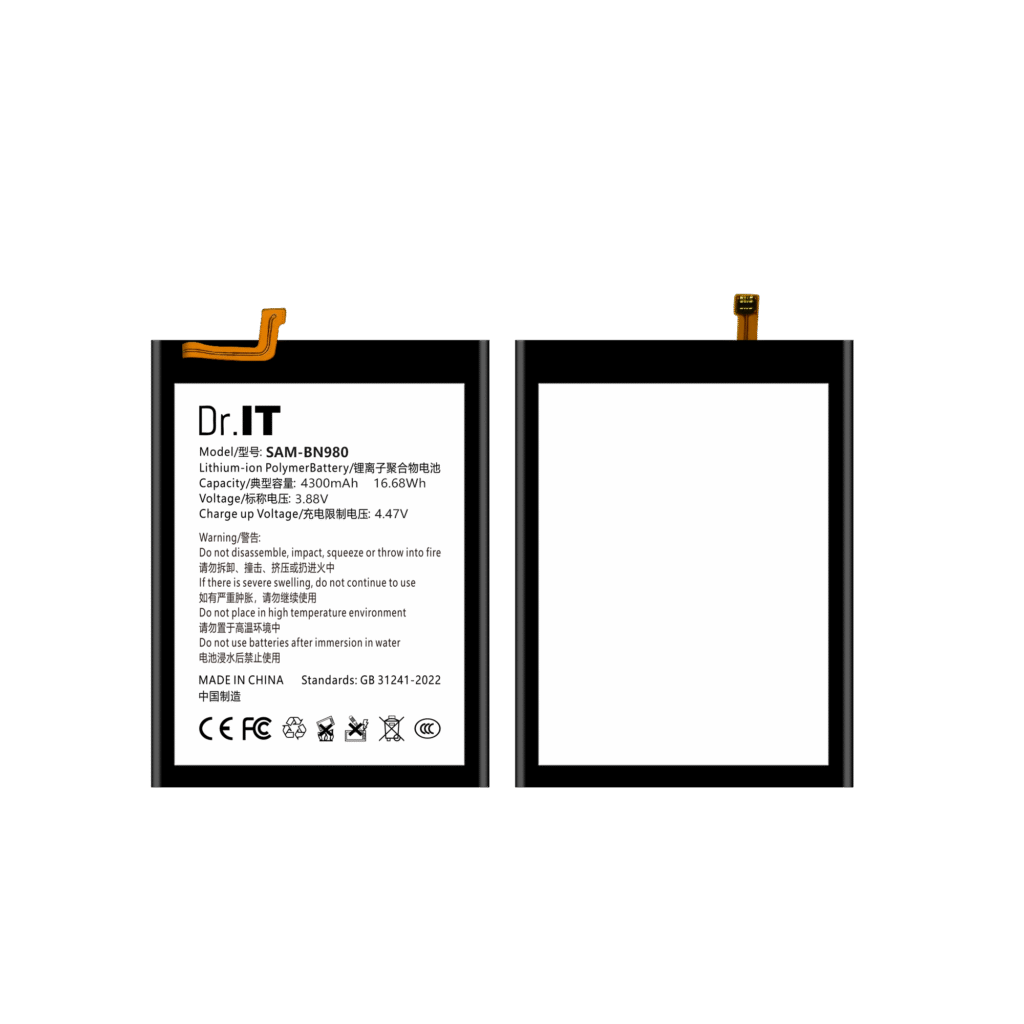
Two points are worth being strict about. First, the description of the goods should match the label information on the battery itself — capacity, nominal voltage and the charge-limit value — so that the paperwork and the product agree; the label guide explains how to check those values and why the watt-hour figure should reconcile with the other two. Second, a supplier’s catalogue photograph is not a document, and a mark printed on a cell is not a test certificate; the shipping and storage guide sets out that distinction in full.
What to confirm with your broker
Your broker or forwarder works to the destination rules, not to the seller’s convenience, so ask them directly:
- How will the goods be described for classification, and is that description accepted for this route?
- Which duties and taxes are expected to apply, and who pays them at each point?
- Does the route have restrictions, documentation or packaging conditions for lithium-ion batteries?
- What happens if the parcel is selected for inspection — what documents must be available, and how long does it take?
- What is the de minimis or low-value threshold treatment, if there is one, and does it apply to this shipment?
- What records must you keep after clearance, and for how long?
None of these answers is universal. They depend on the country, the route, the consignee and the specifics of the shipment, which is why the answers need to come in writing for the shipment you are actually placing, not for a general case. Keep the replies with the order file.
Turn the answers into a landed cost
The purpose of collecting all of this is a number you can plan against. A landed cost for a battery order typically consists of the product value, the carriage, any insurance, the duties and taxes that apply on arrival, the broker and handling fees, and the cost of the documentation and any rework that a mismatch causes. Two things decide whether that number is stable: whether the declared description matches the goods, and whether the freight terms are written down the same way in every quotation.
The mixed-model order list is the right place to build this. Give each model its own line with the code, the artwork text, the capacity, the nominal voltage and the quantity, and the quotation can be compared across suppliers on identical scope. The stock planning guide then works out how many units of each model an order should hold, so the import is sized to the demand rather than to a round number.
Where a specific reference is needed, the catalogue page states the artwork text and the label values for that model, for example the BN980 (4300 mAh, 3.88 V), the BN970 (3500 mAh, 3.85 V) and the B-G7 (5000 mAh, 3.85 V). Availability, order minimums, delivery timing, after-sales conditions and the document set available for your shipment are confirmed in writing for each enquiry. Send your model list, quantities and destination through the DoctorIT quotation page.
Keep the import file with the order
An import that has gone well still leaves a trail that the next order should be able to reuse: the quotation as received, the broker and forwarder answers, the final invoice and packing list, the transport document, the clearance record, and the delivery note with what was actually received. Our receiving and after-sales record covers the last of those steps, where the goods on the pallet are checked against the paperwork that arrived with them.
That file is what makes the second shipment cheaper to plan than the first, because the unknowns are no longer unknown. It also means that a dispute about what was shipped, what was invoiced and what was received can be settled from records rather than from memory.
Customs classification, duties and taxes are the responsibility of the importer and their broker, and depend on the destination country and the individual shipment. Battery installation and handling should be carried out by trained technicians.
If a reference is retired while stock is still in transit, the paperwork has to name the reference that was ordered; the retiring a reference guide covers what to record and when.