

October 29, 2026
Damaged or swollen phone batteries: how repair shops should handle and replace them
A damaged or swollen replacement battery is not an unusual item on a repair bench, but it is one of the situations where a buying process has to change. The cell cannot be sold on, it should not simply be put back in the customer’s device, and how it is handled affects everyone who touches it afterwards: the technician, the courier, the warehouse and the customer. Repair shops that deal with these cases regularly tend to settle a procedure once and write it down. This guide sets out that procedure for wholesale buyers and technicians, without going into any handling technique that would put a person at risk.
Recognise the case and stop using the battery
The usual signs are visible: a casing that is no longer flat, a screen lifted by the cell, a seam that will not close, or a cell that has been punctured or torn. Any battery showing these signs should be taken out of service. Do not recharge it, do not press it back into shape, and do not return it to stock — a cell under pressure is a hazard even if it looks inert.
Also treat as damaged any battery that has been wet, has been dropped and split, or that was operated on after a deep discharge. If you are unsure whether a cell is safe to keep, treat it as damaged until a qualified party has assessed it.
Keep the handling instruction in one place
Two different sets of rules apply here, and they are often confused. The supplier’s handling and storage statement tells you how the product is meant to be kept when it is in good condition. The rules that apply to a damaged cell come from the local regulations and from the carrier’s own conditions for the route you use. Neither of them can be read off a product page, so both belong in writing in your own procedure.
| What to record | Why it is needed | Where it belongs |
|---|---|---|
| Device and battery model | Identifies the case later if the customer or a colleague asks | Your repair or incident record |
| Battery model code and artwork text | Identifies which cell was involved, for the replacement order and any claim | The model file for that reference |
| Condition as found | Distinguishes a swelling case from a puncture or a water case | Your repair or incident record |
| Date, and who handled it | Supports the chain of custody until the cell is handed over | Your incident record |
| Where it was stored or handed to | Shows who had custody and under which rules | Your incident record |
| What was done next | Closes the case and stops it being repeated | Your incident record and the after-sales log |
The receiving and after-sales record is the natural place for this, because it already links a shipment to a lot reference and a date. The sample approval record is not the right place for it — that record describes an accepted configuration, not an incident.
Ask before you move or send anything
Moving a damaged cell, and especially sending one, needs answers in advance rather than on the day. The practical questions are the same ones you would ask a carrier or a local disposal service:
- Does the carrier accept damaged or swollen cells on this route at all, and under what packaging and labelling conditions?
- Which local service accepts lithium-ion batteries for disposal, and what does it require from you?
- Does your supplier have a procedure for a batch that arrives damaged, and how is a replacement arranged?
Those answers come from the carrier, the local service and your supplier in writing; they cannot be assumed, and they differ by country and by route. Our shipping and storage guide covers the questions to put to a supplier for a normal shipment, and the same discipline applies here with less margin for error.
Do not improvise a repair
A swollen or punctured cell is not something to open, puncture, discharge or neutralise by hand. Those techniques exist in industrial handling, they are hazardous, and they are outside anything a repair shop or a purchasing decision should involve. The correct answer to a swollen cell is: stop using it, keep it away from heat and ignition sources, do not leave it unattended in a customer device, and hand it over to a party qualified to take it. If your operation deals with these cases often, agree that handover route before you need it.
Close the loop on the replacement
The customer-facing outcome still matters. When the battery is replaced, the new cell should be the configuration that was approved for that model — the same code, artwork text and label values recorded in your model file — and the replacement should be logged against the original incident so that a repeat case on the same device is visible. The fitment checklist covers the checks before a replacement goes in, and the model code guide explains how to keep the code, the artwork text and the label values together in the first place.
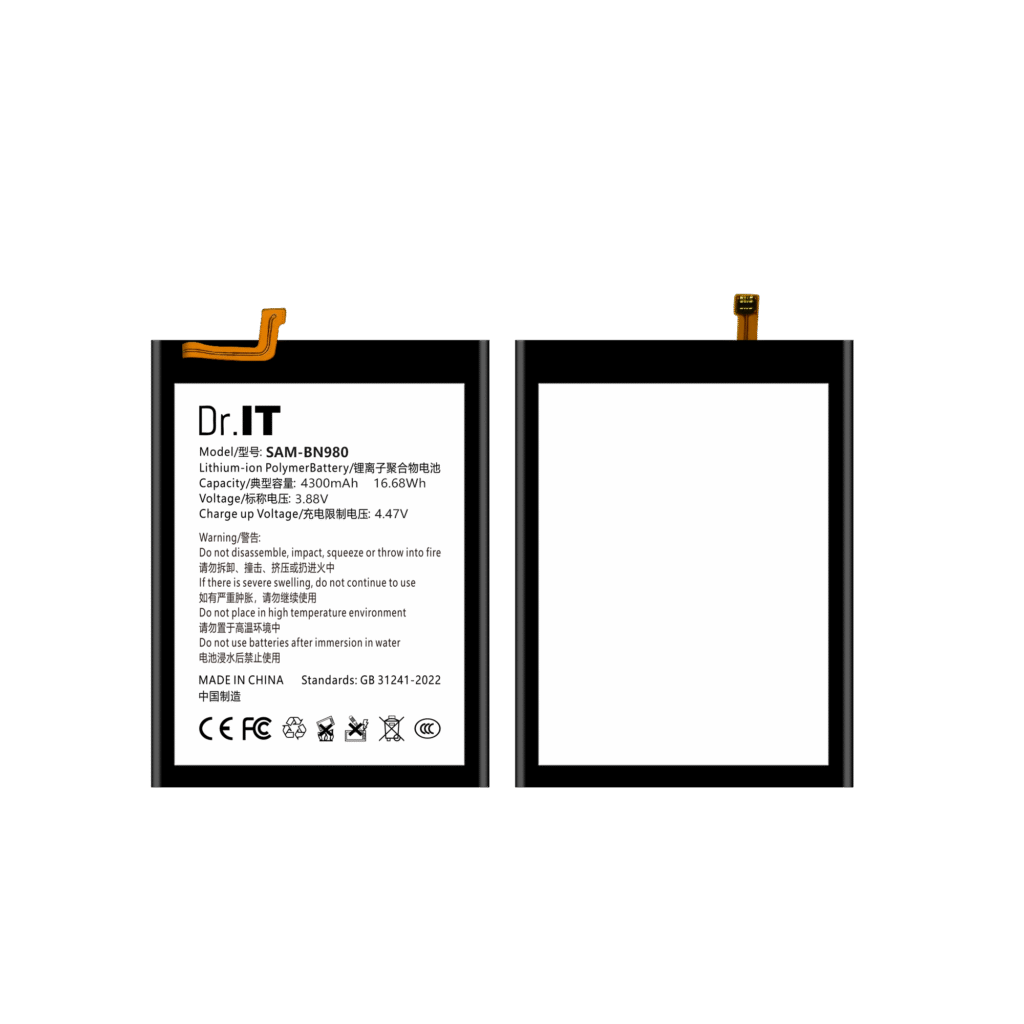
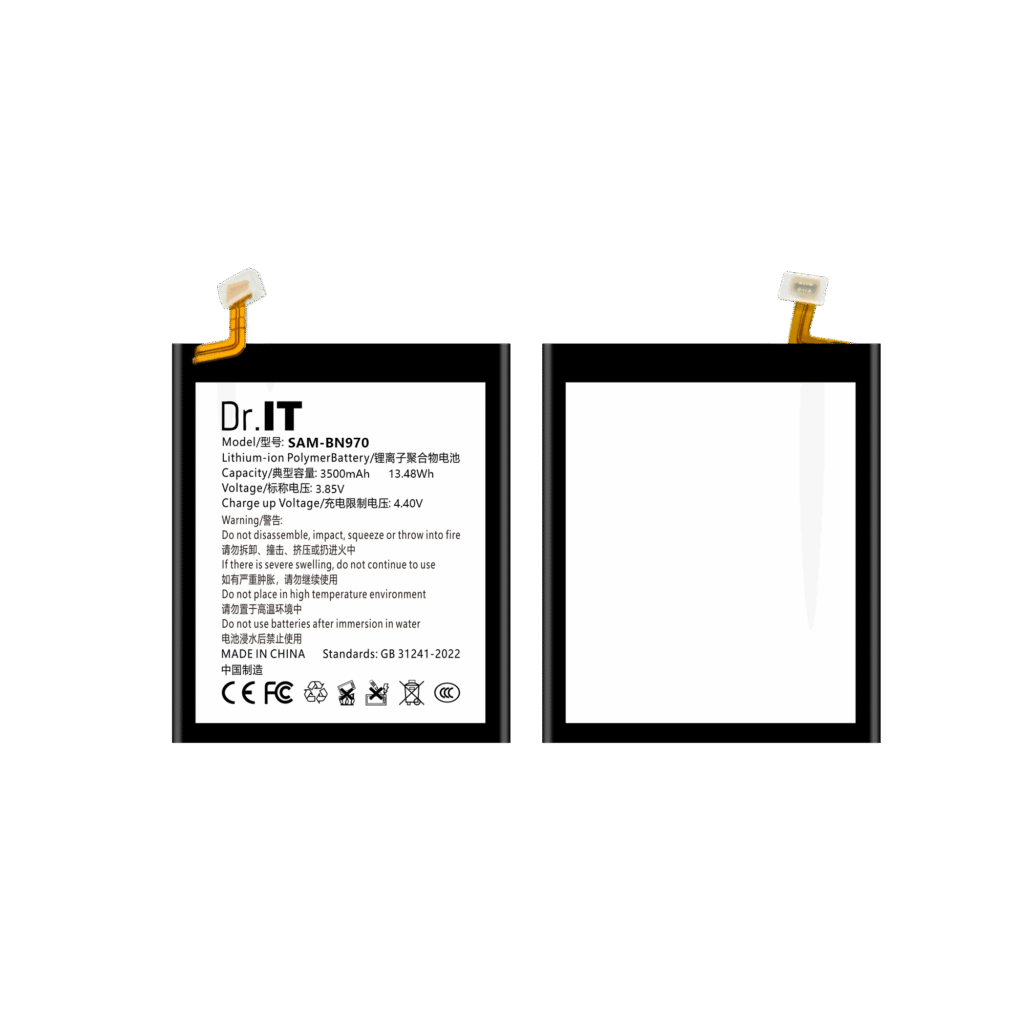
Where the replacement reference has been approved, it can be ordered as a single line on your normal model list. Typical references include the BN980 (4300 mAh, 3.88 V), the BN970 (3500 mAh, 3.85 V) and the B-G7 (5000 mAh, 3.85 V); each catalogue page states the artwork text and label values for that reference, and the stock planning guide covers how many of a model to hold. Availability, order minimums, delivery timing and after-sales conditions are confirmed in writing for each enquiry, and samples can be requested before a bulk order is committed.
Battery installation and handling should be carried out by trained technicians, and lithium-ion batteries must be transported, stored and disposed of in line with the applicable local rules and the carrier’s requirements.
A damaged unit from a reference that has since been retired still has to be recorded against that reference; the retiring a reference guide sets out the record to keep.
For the triage table, the artwork warnings and the receiving and evidence record, see the damaged battery handling guide, which covers the same ground in more detail.