

November 12, 2026
Handling a swollen or damaged battery: what a repair business and a distributor should do
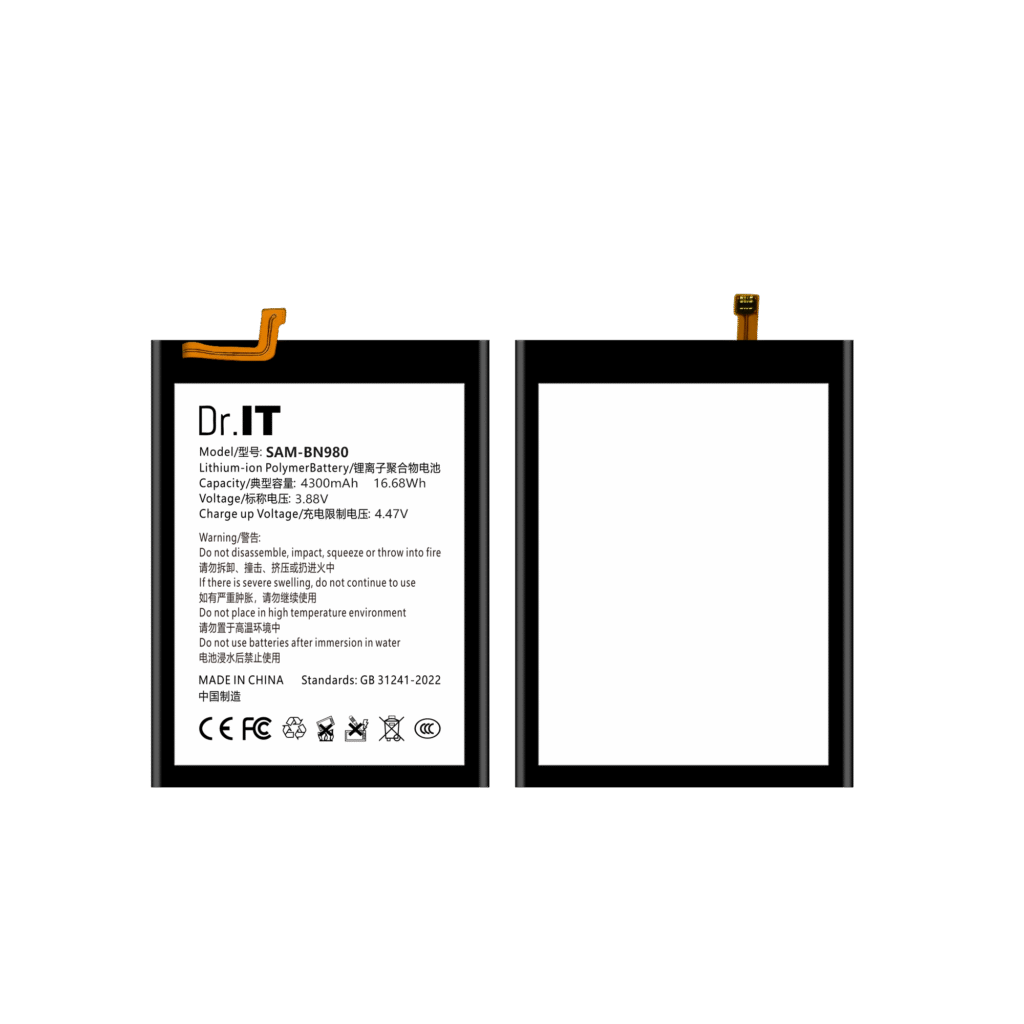
A swollen battery is not a warranty question first; it is a handling question first. The order of those two matters: the handling decides whether anyone is hurt and whether the unit can still be examined, and the warranty question cannot even be opened until the handling has been done properly and the evidence exists. Repair shops and distributors both meet damaged cells — a device arrives with a swollen pack, a carton turns up with one punctured unit, a customer returns a battery that has been left in a hot car. This guide is for repair businesses, distributors and OEM buyers of replacement phone batteries, and it sets out what to do, what not to do, and what to record, in the order those things need to happen. It is written from the warnings printed on the original artwork of the references in this catalogue, and it does not state any specific regulation: the applicable local rules and the carrier’s requirements are what govern storage, transport and disposal, and they differ by country.
What the artwork itself warns about
Every original artwork image behind the references published here carries the same set of printed warnings, in English and Chinese: do not disassemble, impact, squeeze or throw into fire; if there is severe swelling, do not continue to use; do not place in a high temperature environment; do not use batteries after immersion in water. The label also carries disposal and recycling marks and a crossed-out bin symbol.
Those warnings are not decoration on the cell; they are the manufacturer’s statement of what makes a lithium-ion cell dangerous to handle. The rest of this guide is how a workshop or a warehouse turns that statement into a procedure.
Triage: condition, action, record
| What you find | Immediate action | What to record |
|---|---|---|
| Visibly swollen cell, device still closed | Do not charge, do not open the device, do not press the cell. Move the device to a place where it cannot be knocked or heated | Model, date, who found it, where it was found, photographs |
| Cell removed and visibly swollen | Do not puncture, squeeze or bend it. Keep it away from heat and from anything that could be damaged by a leak | Same, plus the reference and the batch if visible |
| Punctured, torn or crushed cell | Do not handle more than necessary, do not try to neutralise it yourself, do not put it in a sealed container | Condition, photographs, location, time |
| Cell wet after immersion | Do not use it, do not charge it, do not ship it in the same consignment as saleable stock | What it was immersed in, how long, condition |
| Warm cell, unusual smell, hissing | Keep clear, do not fit, do not charge, and move the area to a safe distance from stock | Time of discovery, position, batch, stock that was nearby |
| Cosmetic damage only, no swelling | Hold the unit out of saleable stock and ask the supplier before fitting it | Reference, batch, photographs, the reason it was held |
The last row is the one most often skipped, and it is the one that protects a claim: a unit that is only cosmetically damaged has usually been through a process that damaged it — dropped, crushed in a carton, or installed and removed badly — and that is worth knowing before it goes near a customer’s device.
What a repair shop does with the device
When a device arrives with a swollen pack, the customer’s device is the priority and the battery is evidence. Take the device out of charge, do not connect a charger, and do not attempt to remove the cell if the device is flexed or hot. Photograph the device as it was received before anything is opened, because that image is often the only record of how the pack was sitting when the customer brought it in.
A used cell is not a damaged cell, and the two should not be treated the same way. A cell that has completed a number of cycles is a normal return or a normal resale, and the cycle life guide explains what to expect from a cell over its life. A cell that is swollen, punctured, wet or hot is a safety case, and it follows the handling above rather than the warranty route.
Where the device has been in a customer’s hands, what you tell them should be about what you did and what you found, not about what will be replaced. Replacement terms come from the supplier and are confirmed per order, so they should not be promised at the counter. The returns procedure guide covers the claim route for the supplier side of it.
What a distributor does at receiving
Damaged units arrive inside otherwise good consignments, which is why the receiving routine has to include them rather than only counting cartons.
- Keep the unit out of saleable stock and separate from the rest of the carton.
- Photograph it in place before moving it, and photograph the packaging.
- Record the reference, the artwork model text, the batch reference if it is printed, the quantity affected and the condition.
- Check the rest of the same carton and the same batch, because damage in transit usually affects more than one unit.
- Notify the supplier in writing with the record and the photographs attached.
The receiving and after-sales records guide covers the checks and the record format, and the artwork changeover guide covers the case where a later batch arrives with different artwork — which is one of the few things that makes a damaged unit traceable to a shipment rather than to a guess.
Transport and disposal
A damaged or swollen cell is not ordinary freight. Carriers and forwarders have their own rules about damaged or dangerous goods, and a consignment that contains one will be handled differently or refused. Before anything leaves your premises, check what the carrier requires and what the applicable local rules require, and say plainly in the enquiry to the supplier that the unit is damaged rather than describing it as a return.
For disposal, the artwork carries the disposal and recycling marks and the crossed-out bin symbol, which means the cell is not for household waste. The correct route for a damaged cell differs by country and by who holds it — a workshop, a warehouse, a collector — so the practical step is to check the local collection and disposal route for lithium-ion batteries rather than to assume one. The shipping and storage guide covers the general handling and transport side for undamaged stock.
What to keep as evidence
For every damaged unit, keep: photographs of the unit and of the packaging; the reference and the artwork model text; the batch or lot reference; the quantity affected; the date and the location of discovery; the condition in words; and the exchange with the supplier. That set is what turns “we received a damaged battery” into a claim that can be settled, and it costs a few minutes at the moment the unit is found.
Reference pages such as the BN980 (4300 mAh, 3.88 V) and the BN985 (4500 mAh, 3.88 V) publish the artwork model text and the printed warning set for their references, so the order line and the record can be written from the page; the battery catalogue carries the rest of the range. Send your model list, quantities and destination through the DoctorIT quotation page, and start from the wholesale batteries page if you are setting the terms up for the first time.
Battery installation and handling should be carried out by trained technicians, and lithium-ion batteries must be stored, transported and disposed of in line with the applicable local rules and the carrier’s requirements.