

October 31, 2026
Phone battery cycle life and shelf life: what the numbers mean
Cycle life and shelf life are the two figures buyers ask for most often and the two that are hardest to check. A cycle-life number tells you how many charge cycles a cell is expected to last before it reaches a defined end of life; a shelf-life figure tells you how long it can be stored before it is used. Both are useful. Both are also quoted with very different meanings by different suppliers, so a number copied from one catalogue and compared with another can be meaningless.
This guide is for wholesale buyers and repair businesses that specify replacement batteries. It explains what these two terms can and cannot tell you, which parts of a battery’s life can be checked from the product itself, and what to ask a supplier in writing so that a life figure becomes something you can act on rather than something you repeat.
Cycle life is a claim about a test, not about the cell in your box
A cycle is one full charge-and-discharge. A cycle-life figure describes how many of those a cell completes before its capacity falls to a defined threshold. Every part of that sentence is a condition, and the conditions are where two figures for similar cells diverge:
| Element of the claim | Why it changes the number | What to request in writing |
|---|---|---|
| Discharge cut-off | Ending a discharge early leaves more usable capacity in the cell and lengthens the count | The cut-off voltage and the discharge rate used |
| Temperature | Cells cycle differently at different temperatures; a warm test is not a cool test | The ambient and cell temperature during cycling |
| Charging method | Fast charging and shallow cycling do not produce the same result as slow full cycles | Charge current, cut-off voltages and any rest periods |
| End-of-life threshold | Ending at 80% of rated capacity gives a longer life than ending at 70% | The capacity percentage that defines end of life |
| Sample and method | Results from a few cells are not the same as a result across a production batch | The number of cells tested and the test method used |
A number without those conditions is not comparable with anything. Two catalogues can both be honest and still quote very different cycle lives for the same device, simply because one counts to 80% of rated capacity at a cut-off the other does not use. So the useful question is never “how many cycles?” on its own; it is “how many cycles, measured how, ending where, and evidenced by what?”
Shelf life is mostly about storage conditions
A cell that is not being used still ages. The rate at which it ages depends on how it is stored: temperature, how full it is, and how long it sits unused. This is why the same model can behave differently in a warehouse in a cool climate and one in a hot van. Shelf-life figures are therefore statements about a storage condition, and they are only meaningful alongside that condition.
Two practical consequences follow. First, ask for the storage conditions in writing, and keep them next to your stock records rather than in a general terms document: the shipping and storage guide covers what to obtain and how to hold the information. Second, rotate stock by lot rather than by date of purchase, so that cells which have been in the same position in the same warehouse longest are the ones used first. The stock planning guide covers how to size the order and how to keep cover weeks per model, which determines how long stock sits before it moves.
What you can check on the product itself
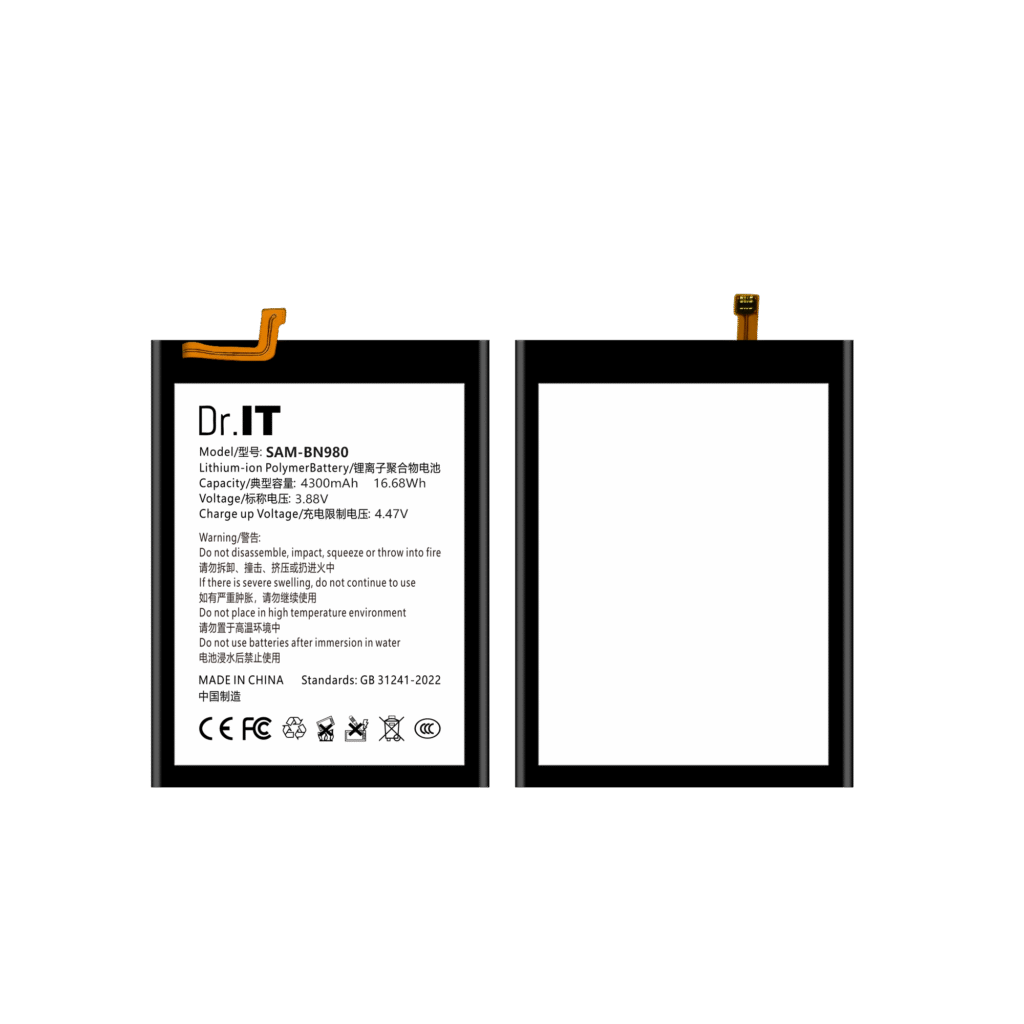
Here the distinction matters, because it is where buying decisions are often made on the wrong evidence. On the product you can verify the label values: the model code, the capacity, the nominal voltage and the separate charge-limit voltage. Those are printed on the cell and on the artwork, and they can be checked against the invoice and against the supplier’s own documentation. Our catalogue pages list exactly these values, taken from the original product artwork, and the label guide shows how to read them and how to check that the watt-hour figure reconciles with capacity and voltage.
What you cannot verify from the product is a cycle-life or shelf-life figure. That is not a criticism of any supplier; it is what a label is. A printed capacity is a specification. A cycle-life number is the summary of a test programme, and the test report, the method and the sample sit outside the box. The sample approval checklist is the place to record what you have actually examined and accepted for a model, and to keep the distinction between what you have seen and what a supplier has stated in writing.
We do not publish cycle-life or shelf-life figures against our catalogue references, because we do not attach third-party test reports to them. What we state is the label data, and any life figure a buyer needs for a specific project is confirmed in writing for that project.
Six questions to put in the enquiry
- Which cycle-life figure applies to which catalogue reference, and what test method and sample produced it?
- What capacity percentage and discharge cut-off define end of life in that figure?
- At what temperature was the test run, and how many cells were tested?
- Is the test report available, and can it be provided for the model you are quoting?
- What are the stated storage conditions and the shelf-life figure that applies to them?
- If a written life figure is part of the offer, what happens if goods do not match it — is that covered by the after-sales terms?
Put those answers into the same file as the specification. The wholesale RFQ template is designed for exactly that: one scope, one set of questions, the same file for every supplier, so the answers can be compared rather than remembered. The mixed-model order list then carries the model codes and label values that the answers refer to.
Turn the answers into a specification you can re-order against
The point of collecting all of this is the second order. When the next order is placed, nothing has to be re-derived: the specification for each model is already written, the lot references are known, and the conditions attached to the previous shipment are on file. The receiving and after-sales record is where the delivery is checked against that specification and where any deviation — a different capacity on the artwork, a lot reference that does not match, packaging that differs from the approved artwork — is written down while it can still be acted on.
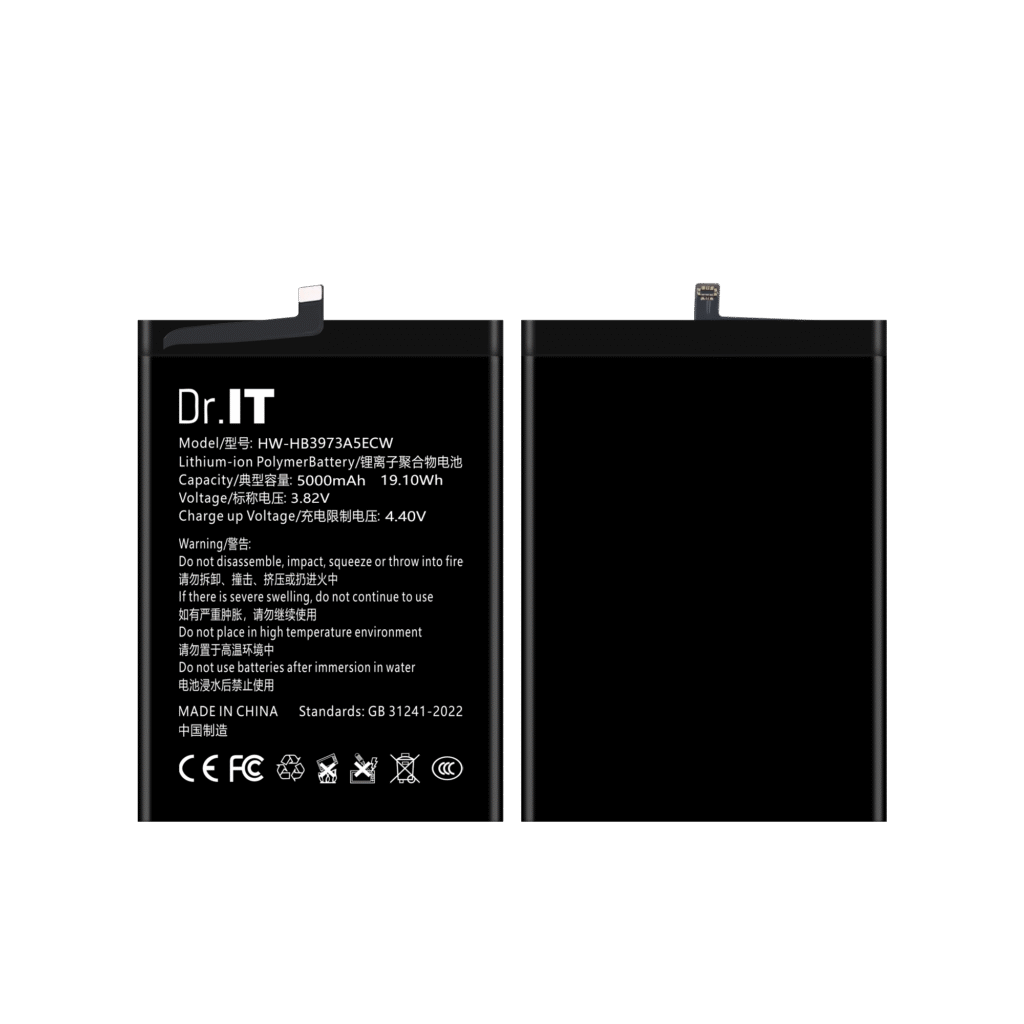
Where a specific reference is needed, the catalogue page states the artwork text and the label values for that model, for example the BN980 (4300 mAh, 3.88 V), the BN770 (4500 mAh, 3.86 V) and the HB3973A5ECW (5000 mAh, 3.82 V). Availability, order minimums, delivery timing, after-sales conditions and the document set available for your shipment are confirmed in writing for each enquiry. Send your model list, quantities and destination through the DoctorIT quotation page.
Battery installation and handling should be carried out by trained technicians, and lithium-ion batteries must be stored, transported and disposed of in line with the applicable local rules and the carrier’s requirements.
A cell that has simply aged is not a damaged cell, and the two are handled differently; the damaged battery guide separates them and sets out the triage.