

November 2, 2026
Phone battery returns: agreeing a procedure before you order
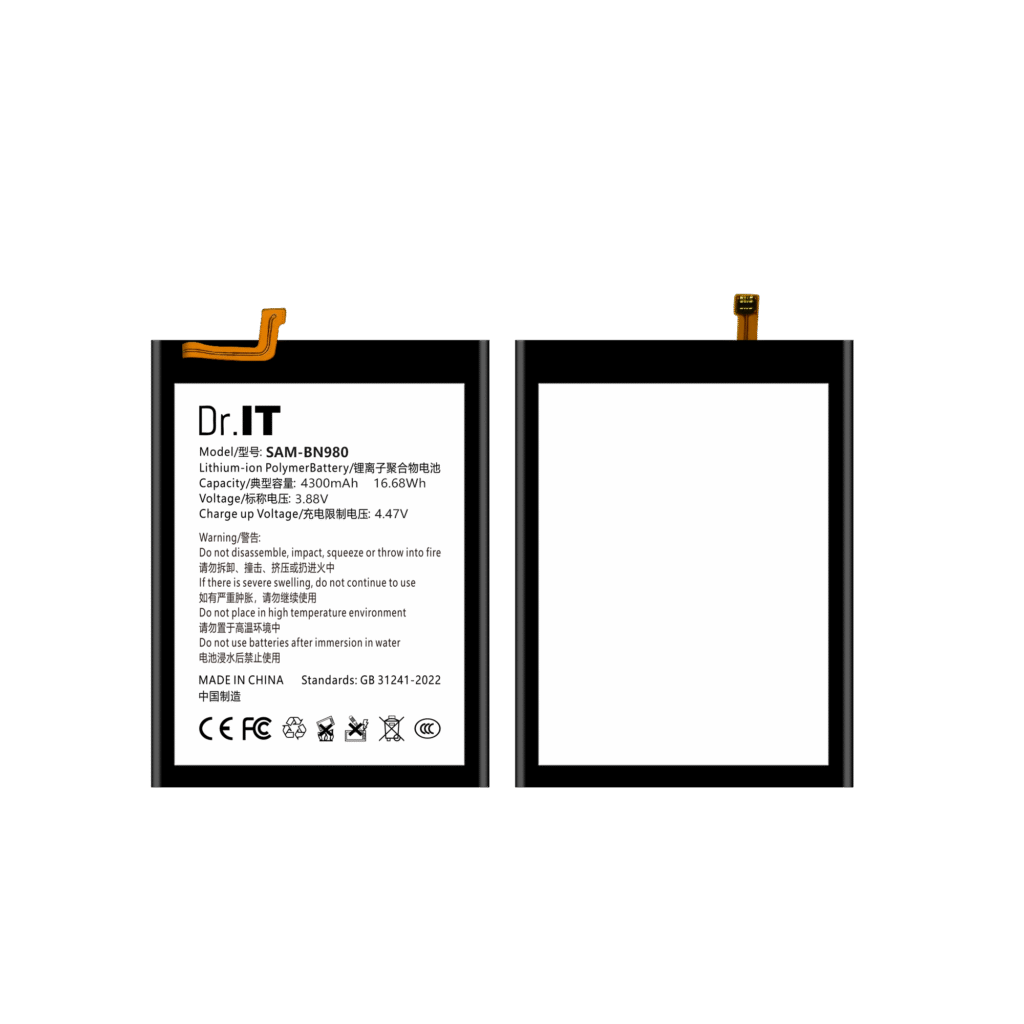
Most battery disputes are not about quality in the abstract. They are about a specific shipment, a specific model and a specific date, and they are lost because nobody agreed in advance what would happen when goods were faulty, incomplete or simply not what was ordered. Agreeing a returns procedure before the first order is cheaper than arguing about one afterwards, and it is the part of sourcing that is easiest to leave out.
This guide is for repair shops, distributors and OEM buyers who order replacement phone batteries. It sets out what a usable returns agreement has to settle, what questions to ask before you order, how to structure the return so it can actually be processed, and how to keep it consistent with the records you already keep for deliveries. It does not state any supplier’s terms, because those differ and have to be confirmed in writing for your own account.
Seven things to settle before the first order
| Point | What has to be decided | Why it matters |
|---|---|---|
| What triggers a return | Which situations qualify: goods that do not match the specification, arrive damaged, are short or over, or fail in service | “Not as expected” is unusable in practice; named situations are actionable |
| Who decides | Whether a claim is judged on the goods in your hands or on photographs and descriptions | Deciding early avoids arguments about a cell that has already been installed |
| Time limit | How long after delivery a claim can be raised, and what happens after it | A window that is too short is effectively no window |
| Evidence | What the buyer must provide: photographs, the label, the lot reference, the packaging | Evidence requirements are easier to meet when they are known in advance |
| Remedy | Replacement, credit or rework, and how the remedy is applied | “We will sort it out” leaves both sides guessing |
| Cost and logistics | Who pays the return freight, and what packaging and labelling the carrier requires | Lithium cells have their own transport conditions and cannot be sent like any other part |
| Interaction with the invoice | Whether a claim is settled against the original invoice, a credit note or a replacement shipment | It affects your accounts and your stock records |
These seven points fit on one page of an agreement, and a supplier that answers them clearly is easier to work with than one that answers them generously. The wording matters less than the fact that they are written down before anything goes wrong.
Agree the evidence list while you are still on good terms
The evidence a buyer can produce after three weeks of use is much weaker than the evidence they can produce at the moment a carton is opened. It is worth asking, before ordering, exactly what the supplier needs to see: photographs of the cell and of its label, the artwork model text, the lot or batch reference from the packing list, the outer carton label, and the delivery paperwork. If the answer is “the model code on the label and a photo”, the claim is easy to make. If the answer is “a full report”, expect a slower process.
Keep the lot reference on every delivery, because it is the link between the goods in your hands and the production batch they came from. The receiving and after-sales record is the natural place to capture it, next to the quantity received and the condition, and the mixed-model order list is where the ordered quantities live, so a claim can be tied to both sides of the transaction.
Separate three kinds of problem
Problems with a battery order are usually one of three things, and they are handled differently. A specification mismatch — the artwork shows a different capacity or a different model text — is a documentation and supply problem, and the goods are not fit to go into a device. A transit problem — a crushed carton, a wet carton, a leaking cell — is a logistics problem, and the carrier or the insurer may be involved rather than the supplier. And a performance problem — a cell that does not behave as expected in service after fitting — needs the physical evidence and usually an agreed test route before anyone can say what should happen.
Confusing the three is the most common reason a claim stalls. A specification mismatch can be settled by sending the label photograph. A performance problem cannot be settled by a photograph at all, because the condition that produced it may be gone. So the first question in any claim is which of the three it is, and the record should say.
Returning a cell is a transport question, not a parcel question
If a cell has to come back, it is a lithium-ion battery travelling on a carrier’s terms, and the carrier’s conditions for the route apply. Ask before the cell is boxed: whether damaged or suspect cells are accepted at all, what packaging and marking they require, what documentation is needed, and whether the route you normally use is the route you can use for a return. A cell that has been fitted, damaged or otherwise treated differently from a new stock cell may fall under different conditions from the original shipment.
The same principle appears in the damaged battery procedure, which covers the cases where a cell is unsafe to transport at all. And the shipping and storage guide sets out the handling and storage statement to request with any order, since that statement is also what a carrier will ask about.
Keep one returns record, linked to the delivery
The record for a claim should not be a separate pile. It belongs with the delivery it relates to, and it should carry the same identifiers: model code, artwork text, lot reference, order reference, date received, date raised, what was found, what was sent back and when, and the outcome. When the same model produces claims twice, that pattern is visible in the records, which is exactly what a buyer needs in order to decide whether the problem is with the goods, the specification or the device.
A useful discipline is to review claims by model rather than one by one. Two claims on one reference in a quarter is a signal; two claims on six different references is probably noise. The sample approval checklist is the document that decides what configuration was accepted in the first place, and it is the reference point for any claim about that configuration — so it should be kept alongside the delivery records, not in a separate folder.
Where a replacement reference is needed, the catalogue page for each model states the artwork text and the label values, so a claim or a reorder can be raised against the same figures as the original order — for example the BN980 (4300 mAh, 3.88 V), the BN58 (5160 mAh, 3.87 V) and the BN985 (4500 mAh, 3.88 V). Availability, order minimums, delivery timing, after-sales conditions and the document set for your shipment are confirmed in writing for each enquiry. Send your model list and the details of the claim through the DoctorIT quotation page, or start from the wholesale batteries page if you are setting the terms up for the first time.
Battery installation and handling should be carried out by trained technicians, and lithium-ion batteries must be transported, stored and disposed of in line with the applicable local rules and the carrier’s requirements.
A changeover that was not communicated is settled the same way as any other specification difference — the artwork changeover guide lists the questions to have answered before the shipment arrives.