

November 9, 2026
How to compare battery quotes: the costs a unit price hides
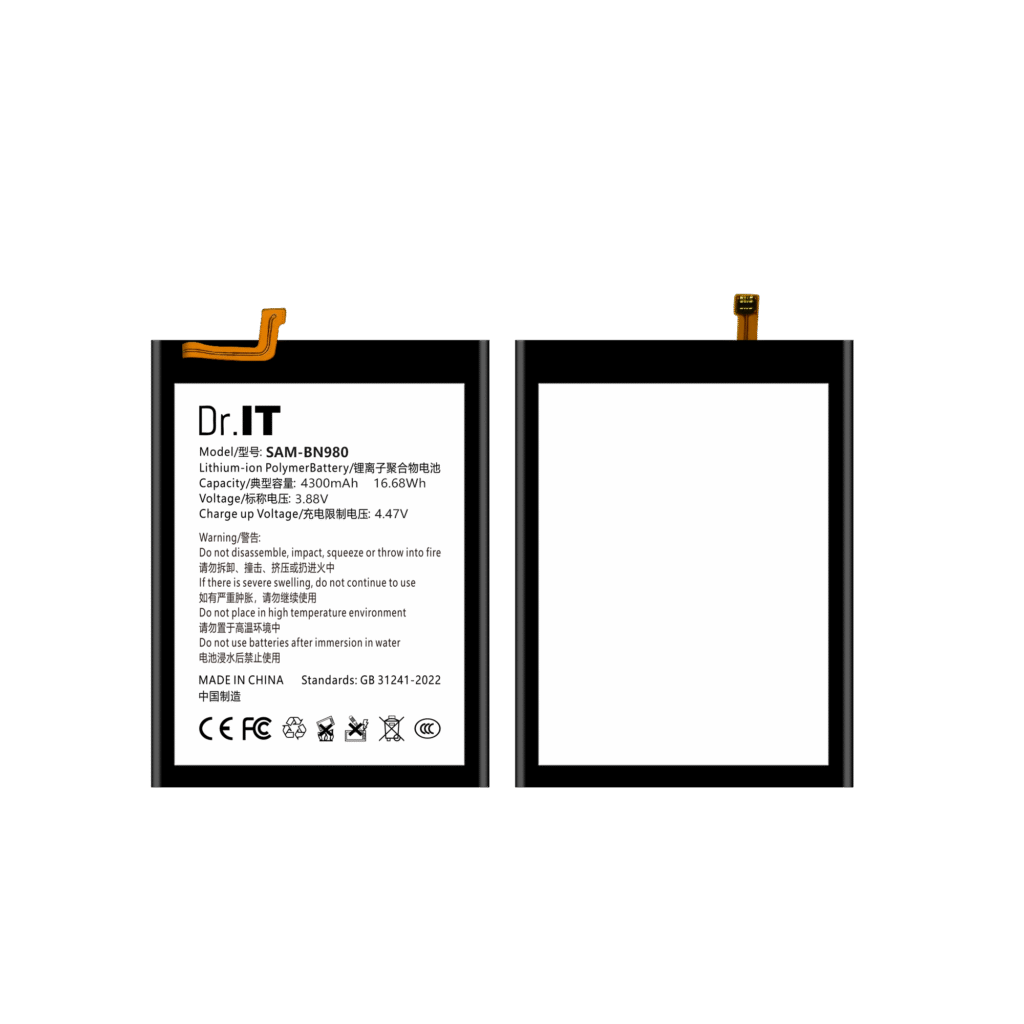
Two suppliers quote the same battery reference at different unit prices, and the lower number is often the one that costs you more once the goods have landed. A unit price is the visible part of a quote; the rest is freight by volume rather than by weight, duties, payment terms, the cost of the stock you have to hold, the labour of putting a mixed shipment away, and the cost of the small percentage of units that arrive damaged, short or mismatched. This guide is for repair shops, distributors and OEM buyers of replacement phone batteries, and it explains how to turn two quotes into a comparison you can act on, what a quote has to state for the comparison to be valid at all, and which costs are worth chasing and which are not. It contains no prices from any supplier: pricing is confirmed per enquiry, and the point here is the structure of the comparison rather than any particular figure.
The costs a unit price hides
| Cost element | What it depends on | How to settle it in writing |
|---|---|---|
| Cell price | Reference, order quantity, and how the order is mixed across references | Price per reference at the quantity you are actually ordering |
| Freight | Weight and volume of the shipment, and the packaging unit | The delivery term named on the quote, and the charge per shipment |
| Duties and taxes | Destination country and the tariff classification of the goods | Who settles them, and what documentation is issued |
| Payment and currency | Payment terms, the currency, and how long the rate is held | The currency, the payment milestones, and the period the price is valid for |
| Packaging unit | Whether cells arrive loose, bagged, or in printed boxes | What is in a unit, and how many units per carton |
| Minimums and mix rules | Per-reference minimums and whether references can share a carton | Minimum quantity per reference, and whether mixed cartons are allowed |
| Short or faulty units | Transit handling and the claim route | The replacement or credit route, and the evidence it needs |
| Stock depth | Lead time against your own consumption rate | How long the quote assumes you can cover demand |
| Your own time | Receiving, checking, labelling and re-binning a mixed shipment | Not a supplier term — this one is yours to measure |
The last row is the one buyers forget. A mixed consignment of forty references does not take forty times as long to put away as a carton of one reference does; it takes something closer to one carton plus forty small checks, and the receiving procedure is what makes that true. The receiving and after-sales records guide covers the checks that have to happen anyway, and the buying unit guide covers how the packaging unit changes both the freight and the handling.
A landed cost you can compare
Most buyers already have a landed-cost figure somewhere in their head. The problem is that it is rarely written down in the same form for two suppliers, so the comparison happens on unit price alone. Write it down once, per quote, in the same order:
- Cell price for the reference at your quantity.
- Freight for the shipment, at the delivery term named.
- Duties and taxes you will settle, if any.
- Payment and currency effects over the period the quote is valid.
- Allowance for short or faulty units, taken from your own recent record rather than a guess.
- Divide by the number of units the shipment contains.
The result is a cost per unit delivered to your door, which is the only number that can be compared with another supplier’s. Keep the working on one line per reference per quote, and the mixed-model order list is the right format for it, because a mixed order is where the comparison usually goes wrong.
What a quote has to state to be comparable at all
Before comparing numbers, check that the two quotes describe the same thing. A quote that omits any of the following cannot be compared on price, whatever it says:
- The catalogue reference and the artwork model text printed on the cell.
- The buying unit and what is inside it.
- The quantity per reference and the total.
- The price basis — which standard trade term applies, and to which place.
- The currency and how long the price is held for.
- The payment milestones.
- The delivery location and the expected timing.
- Packaging and the documents that accompany the shipment.
- The route for short, damaged or mismatched units.
The wholesale RFQ template is built so that each of these appears on the same line for every supplier, which is what makes the answers comparable later. The catalogue data guide covers the field level detail behind the first two of them.
Compare on the cost of a fitted battery
A repair business does not sell a cell, it sells a fitted battery, and the difference between two quotes often comes from what happens to the unit after it arrives: consumables consumed, handling time per job, and the small number of units that are returned because they did not fit. A quote that is 5% cheaper per cell can be the more expensive arrangement if the unit arrives without the consumables a technician needs, because the missing consumables are bought locally at a worse price and the bench time per job goes up.
covers which unit changes which of these, and the fitment checklist
are how you establish the return rate rather than assume it.
What changes when the order gets bigger
Larger orders usually lower the unit price, and they also change three other things that a price-focused comparison ignores: the ordering unit may need to be uniform across the shipment, the minimum quantity per reference can force you to buy stock you will not sell this season, and the stock depth you carry ties up more cash while the stock planning guide shows how to size that cover against your own consumption.
The honest way to handle it is to compare the same order at two volumes and keep both answers: the price you would pay now, and the price you would pay if you doubled the quantity, with the stock depth each implies. That is a decision about cash, not just about price.
Eight questions when two quotes differ
- Is the artwork model text the same in both quotes?
- Is the buying unit the same?
- Which delivery term is named in each, and to which place?
- Which currency, and how long is the price held?
- Are the minimum quantities per reference the same?
- What is each quote’s replacement route for a faulty or mismatched unit?
- Which documents travel with the shipment in each case?
- Does either quote bundle references into a mixed carton, and what does that change for freight and for receiving?
Send the same eight questions to every supplier and put the answers next to the numbers, not instead of them. Reference pages such as the BN980 (4300 mAh, 3.88 V) and the BN985 (4500 mAh, 3.88 V) publish the artwork text and label values you should see quoted for the reference; the battery catalogue carries the rest of the range.
Send your model list, quantities and destination through the DoctorIT quotation page, and start from the wholesale batteries page if you are setting the terms up for the first time. Pricing, order minimums, timing and after-sales conditions are confirmed in writing for each enquiry and each shipment, against the scope you send.
Battery installation and handling should be carried out by trained technicians, and lithium-ion batteries must be stored, transported and disposed of in line with the applicable local rules and the carrier’s requirements.