

November 10, 2026
After the first order: how to make your second battery order faster and safer
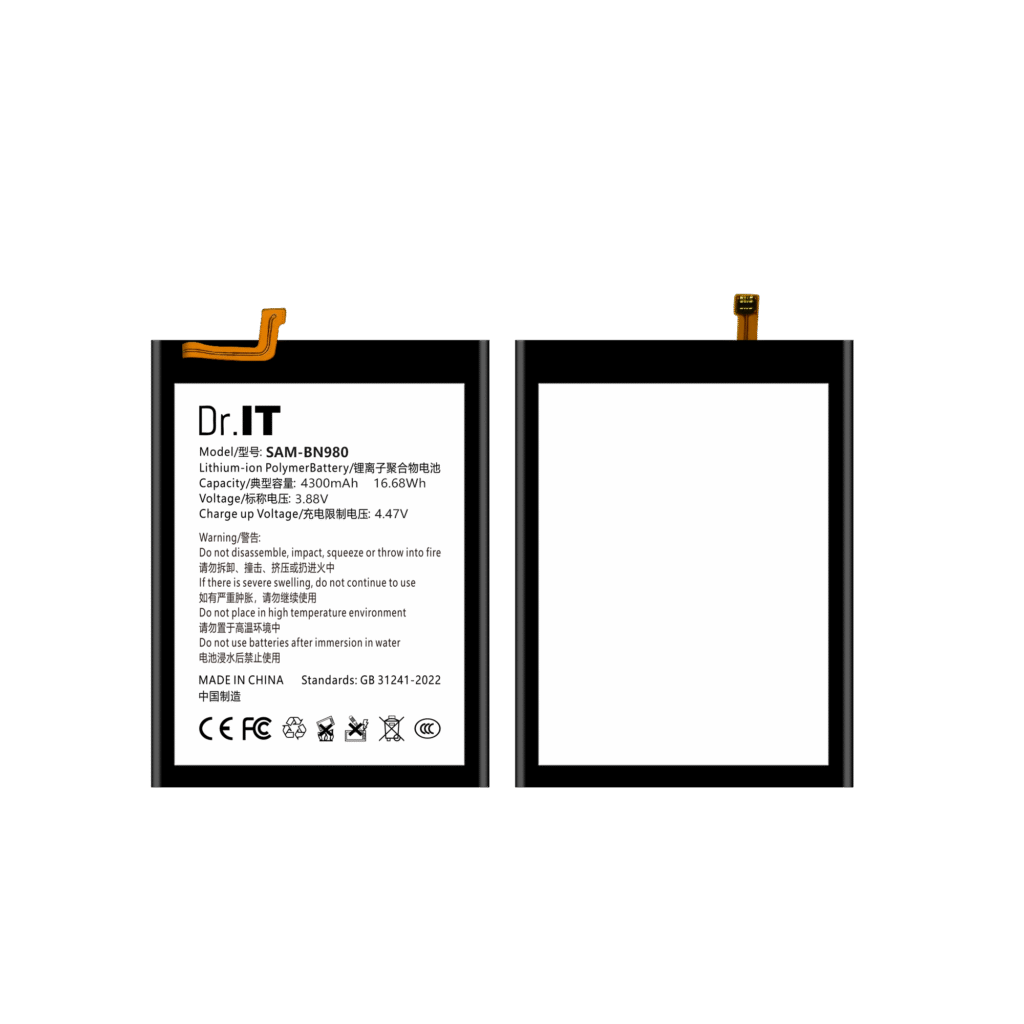
Most battery buyers spend a great deal of care on the first order and then improvise the second one. The first order is checked properly: samples are approved, the artwork is photographed, the fitment is confirmed, the shipment is counted and recorded. Then a second order arrives, it is typed from memory, the reference list has been edited in a hurry, and two things quietly go wrong — a reference is ordered under a slightly different name, and a unit that used to be a box of ten is now a box of five. Neither mistake is visible on the invoice, and both are found at the bench, or by the customer. This guide is for repair shops, distributors and OEM buyers of replacement phone batteries, and it sets out what to standardise after the first order so that every order after it is faster, cheaper to place and easier to check. It is the operational counterpart to the stock planning guide, which covers how much to hold: this one covers how to order the second time without re-learning everything.
What to standardise after the first order
| Item | Standardise it as | What it prevents |
|---|---|---|
| Reference line | Catalogue code plus the artwork model text, on one line | Ordering one reference under a name that no longer matches the label |
| Buying unit | One stated unit per reference, with what is inside it | A carton arriving in a format the receiving routine was not set up for |
| Label values | Capacity, nominal voltage, charge-limit voltage and the printed watt-hour figure | Accepting a shipment whose label does not match the approved sample |
| Order file | One line per reference with quantity, destination and delivery term | Re-typing the order and introducing a typo in a model code |
| Shipment record | Date, batch reference, quantities received and counted, condition | Being unable to trace a faulty unit back to a shipment |
| Contact and terms | One named contact, the agreed delivery term, currency and price validity | Re-negotiating the same terms on every order |
None of these rows is complicated, and all of them are decided once. The value is that the second order is then a copy with the quantities changed, which is exactly what makes it cheap.
Keep the reference line exactly as it is
The single most common source of trouble is a reference line that drifts: “BN950” becomes “bn950 battery”, then “Samsung BN950 3300”, then a note in someone’s head. Each version may be understandable to a person, but only one of them matches the code on the invoice, the code in the catalogue and the code printed on the artwork. The fix is to keep the catalogue code and the artwork model text together on every line, exactly as they appear on the product page, and to change them only through the order file rather than by typing over them.
The mixed-model order list exists for this: one line per reference, one column for the code, one for the artwork text, one for quantity, one for the destination. It is a file you copy for the next order, not a form you fill in from scratch. The model code guide explains why the numeric part of a code carries no capacity information, which is the reason the artwork text has to travel with it.
Fix the buying unit once
After the first shipment you know what a unit actually is: whether it is loose, bagged or boxed, how many units are in a carton, and what else is in it. Write that down once, next to the reference. It is what tells you whether a later shipment is the same goods or a different format with the same code, and it is what the buying unit guide explains about freight, handling and traceability.
If a supplier changes the unit format, that is worth catching before the shipment is booked rather than at receiving, which is why the question belongs in the order file and not in a memory.
Make the receiving record the thing you can search
The second-order advantage comes from having the first shipment’s record in a form you can look things up in. Four fields do most of the work: the date, the batch or lot reference, the quantities received and counted, and the condition on arrival. With those, a faulty unit can be traced to a shipment and a batch; without them, a claim is an argument about memory.
The receiving and after-sales records guide sets out the checks and the record format, and the artwork changeover guide covers what to do when a later batch arrives with artwork that differs from the approved one — which is exactly the situation the batch field makes detectable.
Standardise the terms so the order is one message
The commercial part of an order is also worth writing down once: who the contact is, which delivery term applies and to which place, which currency the price is in, how long the price is held, and the payment milestones. When these are already agreed, the second order only needs to confirm the quantity and the destination, and any change to the terms becomes visible as a change rather than as a silence.
covers why a quote has to state these fields before two quotes can be compared, and the wholesale RFQ template is the format that keeps them on the same line for every supplier.
Review the file, not the market
Once the order file is standardised, the review you need each cycle is short: confirm that every reference still exists in the catalogue, that no reference has been quietly swapped for a different artwork, that the unit format has not changed, and that the quantities match what the shelf actually needs. The stock planning guide covers sizing the quantities; the sample approval checklist covers the case where a reference does change and a new sample has to be approved before the next order.
Reference pages such as the BN980 (4300 mAh, 3.88 V) and the BN985 (4500 mAh, 3.88 V) publish the artwork model text and label values for their references; the battery catalogue carries the rest of the range.
Send your model list, quantities and destination through the DoctorIT quotation page, and start from the wholesale batteries page if you are setting the terms up for the first time. Availability, order minimums, timing and after-sales conditions are confirmed in writing for each enquiry and each shipment, against the scope you send.
Battery installation and handling should be carried out by trained technicians, and lithium-ion batteries must be stored, transported and disposed of in line with the applicable local rules and the carrier’s requirements.