

November 4, 2026
What a replacement battery label can and cannot prove
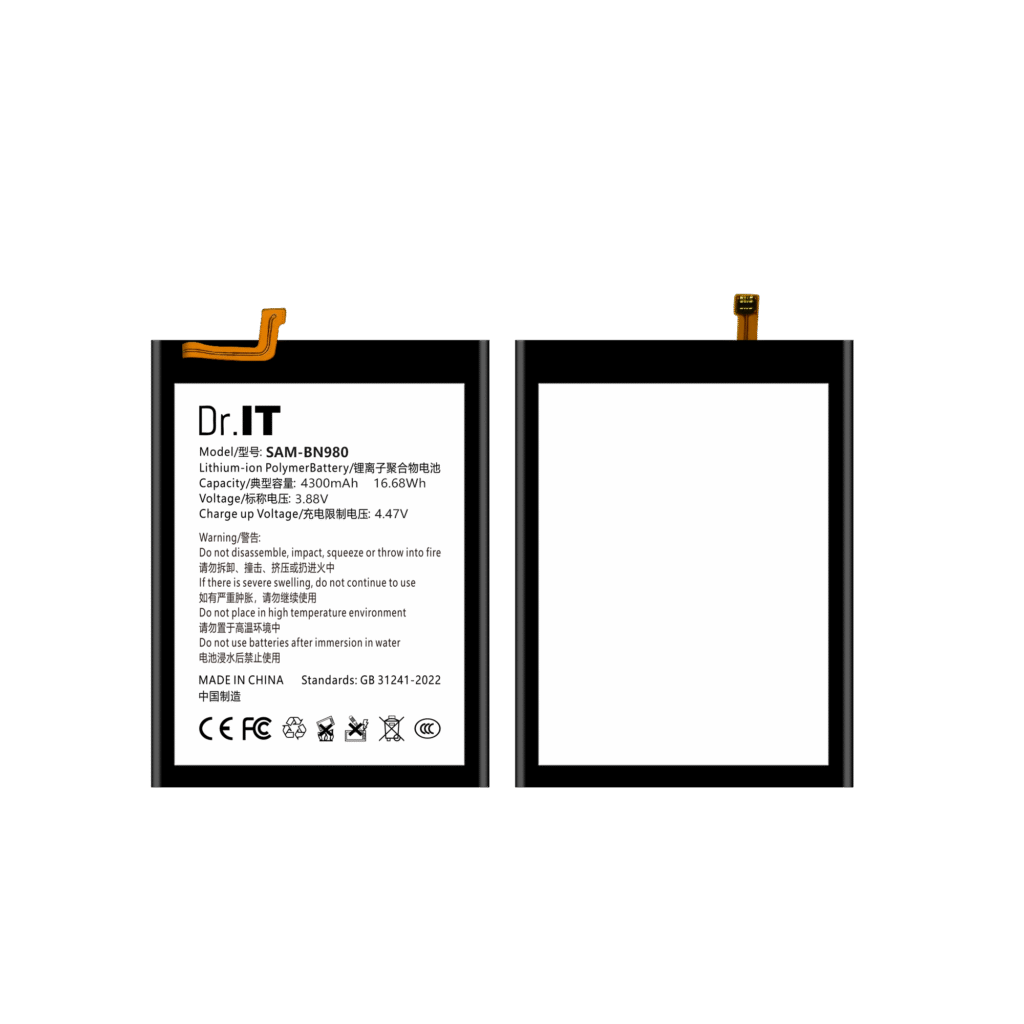
A replacement battery arrives as a photograph, a specification line, a sample or a carton. Each of those carries a different amount of weight, and buyers who treat them as equally solid end up making decisions on evidence that cannot carry them. A printed capacity is a statement on the cell; a catalogue page is a description of that statement; an approved sample is a physical cell somebody held; and a measured result on your own goods is the only thing that speaks to what was actually delivered. This guide is about telling those apart, so that the questions you ask a supplier, and the checks you run on arrival, match the strength of the evidence available.
It is written for repair shops, distributors and OEM buyers of replacement phone batteries, and it uses the ordinary categories of claim that appear in this trade: capacity, energy in watt-hours, cycle life, certification and originality. Nothing here states any supplier’s specifications; the values on each catalogue page are the values printed on the artwork for that reference.
Four kinds of evidence, in order of weight
| Evidence | What it can establish | What it cannot establish |
|---|---|---|
| Catalogue page or product sheet | The identity and the stated label values of a reference, and what the supplier says it supplies | Nothing about the goods in the carton you have not opened |
| Product artwork image | Which model text, capacity, nominal voltage and charge-limit voltage appear on the cell for that reference | The delivered capacity, the cell’s history, or the accuracy of the printed figure |
| Approved sample | That one physical configuration — connector, dimensions, accessories, packaging — was seen and accepted | That production goods will match the sample; that capacity is as printed |
| Goods received and checked | That what arrived matches the approved configuration and the stated label values | Energy delivered over time; no bench check in a workshop can settle that |
The order matters. Each tier is evidence about a different question, and the mistake is usually a tier being skipped: a specification is read as a measurement, or a sample is read as a guarantee about production.
What a label does establish
A battery label states identity and electrical values: the model text printed on the cell, the rated capacity, the nominal voltage, and the charge-limit voltage. Those four are checkable on the goods in your hands within seconds of opening the carton, and they are what a catalogue page should be reproducing. The battery label guide sets out each field, and the model code guide explains why the numeric part of a code tells you nothing about capacity — which is exactly why the artwork text has to travel with the reference in your order list.
What the label establishes is that the cell states those values. The charge-limit voltage matters separately from the nominal voltage, because a cell charged beyond its limit is a damaged cell regardless of how good it looks on arrival.
What a label does not establish
Three things are routinely read off a label and should not be.
- Real delivered capacity. The printed figure is a claim by whoever printed the label. A workshop cannot establish the delivered capacity of a pouch cell with a quick measurement, and a meter reading taken on a partly charged cell says nothing useful. If delivered capacity matters to you, it has to be established by a stated method on the delivered goods, with the method and the report identified.
- Energy in watt-hours. Watt-hours are usually a product of the other two figures, not an independent measurement. Where a printed watt-hour figure does not reconcile with capacity multiplied by nominal voltage, the two printed values are telling different stories and neither settles the question. Specify the capacity and the voltage, and put the difference in writing.
- Cycle life, provenance and certification. A printed standard reference or a certification mark on a label states what the artwork says, not what a document set proves. Those claims need a named report, a named standard, and a document you can hold, referenced to your own account and shipment.
Several references in this catalogue print a watt-hour figure that does not reconcile with their own capacity and voltage. Those pages say so explicitly, because a buyer who finds the difference after the order has shipped has no way to resolve it. The cycle life and shelf life guide covers what storage and age do to a cell in the meantime.
Five checks on the first carton
When the first shipment of a reference arrives, five checks take a couple of minutes and settle most disputes before they start.
- Read the model text on the cell and compare it with the artwork model text for that reference.
- Read the capacity and the nominal voltage, and compare them with the confirmed specification.
- Read the charge-limit voltage and confirm it is a charging limit, not the nominal voltage repeated.
- Count the cells against the packing list, and check the lot or batch reference on the carton against the delivery paperwork.
- Look at the cells and the packaging: no swelling, no impact marks, no crushing, no water ingress, and the packaging as specified.
Record the result against the delivery, not in a separate notebook, so that a later claim can be tied to the lot it came from. The receiving and after-sales records guide sets out the fields, and the returns procedure guide covers what to have agreed with the supplier in advance so that a claim is actually actionable.
Red flags worth stopping the order for
Some findings do not belong in a note to revisit later. The model text on the artwork is not the reference you ordered. The label values differ from the specification you approved. The cell is swollen, dented, wet or crushed, or the packaging does not match what was agreed. The safety marks on the artwork differ from the goods. In each of those cases the right step is to stop, photograph the goods with the lot reference visible, and raise it before the rest of the shipment is consumed.
None of these are exotic: they are the ordinary result of an image being used for a different batch, a carton being handled badly, or a configuration changing without notice. That last one is why the fitment checklist and the sample approval record exist — they fix the configuration in writing, so a later difference is a fact rather than an argument.
Put the specification in writing before the order
Most disputes are not about quality. They are about two parties describing different things with the same words. The way to avoid that is to send the specification with the enquiry and have it confirmed: the reference, the artwork model text, the label capacity, the nominal voltage, the charge-limit voltage, the accessories and packaging, the documents that will accompany the shipment, and the acceptance checks the goods must pass. The OEM specification sheet guide sets out the eight blocks such a specification needs, and the wholesale RFQ template carries them into a request you can send unchanged to every supplier, which is what makes the answers comparable.
Where a catalogue page exists for a reference, it carries the artwork text and the label values, so the same figures can be used on the order file, in the enquiry and on the goods check — for example the BN980 (4300 mAh, 3.88 V), the BN985 (4500 mAh, 3.88 V) and the BN935 (3200 mAh, 3.85 V).
Availability, order minimums, delivery timing, after-sales conditions and the document set for your shipment are confirmed in writing for each enquiry. Send your model list, quantities and destination through the DoctorIT quotation page, and start from the wholesale batteries page if you are setting the terms up for the first time.
Battery installation and handling should be carried out by trained technicians, and lithium-ion batteries must be stored, transported and disposed of in line with the applicable local rules and the carrier’s requirements.
The artwork text is part of the evidence, and the artwork prefix guide shows how the first part of that text identifies the device family and can be used as a receiving check.