

November 6, 2026
Bulk cells or packaged batteries: choosing the right buying unit
A buyer who has decided which battery reference they want has not finished choosing. The same reference can arrive in different buying units, and the unit is not packaging trivia: it decides how much labour a bench-hour costs, how a fault can be traced back to a batch, what a claim is worth when it comes back, and how much stock you have to hold to cover a week of demand. Yet it is often the last thing agreed, and it is often agreed in words rather than in a specification. This guide is for repair shops, distributors and OEM buyers who order replacement phone batteries and want the buying unit decided properly, early and in writing.
It covers what a buying unit actually changes, what has to be written down for it, how to match the unit to your workflow, why traceability has to survive the packaging, and the ten questions to settle in the enquiry. It does not state any supplier’s minimum quantities, packaging formats or terms; those are confirmed per enquiry and per shipment.
What the buying unit actually changes
| Area | What changes with the unit | Why it matters on the bench |
|---|---|---|
| Handling time per job | Whether consumables arrive with the cell or must be pulled from a separate stock | A repair that needs adhesive and a pull tab mid-job loses minutes to a bin |
| Identification | Whether the reference and label values are readable on the unit you hold | If the code is not legible at the bench, the wrong reference gets fitted |
| Stock counting | Whether stock is counted by cell, by pack, or by box | A unit that does not divide cleanly into your demand creates awkward remainders |
| Storage | How much volume a week of demand occupies | Bulky units can cost more shelf space than the cell price saved |
| Transport | Weight, volume and the number of packages per shipment | Lithium transport rules apply to the goods regardless of the unit |
| Claims | What you can return and what evidence you can produce | A claim needs the unit, the label and the batch reference |
Read across the rows and a pattern appears: the unit mostly changes labour, traceability and working capital, not the cell. The electrical specification of the reference does not move because it arrived in a different unit, which is why the unit belongs in the order file as a separate decision from the reference.
Define the unit in writing
“Packaged” is not a specification. A unit that is described only as packaged leaves four things open, and all four matter on a busy day.
- What is in the unit. The cell is certain. The adhesive strips, the pull tab, the flex or connector tape, the protective bag or printed box — each is a separate line that has to be named, because it is what the technician reaches for.
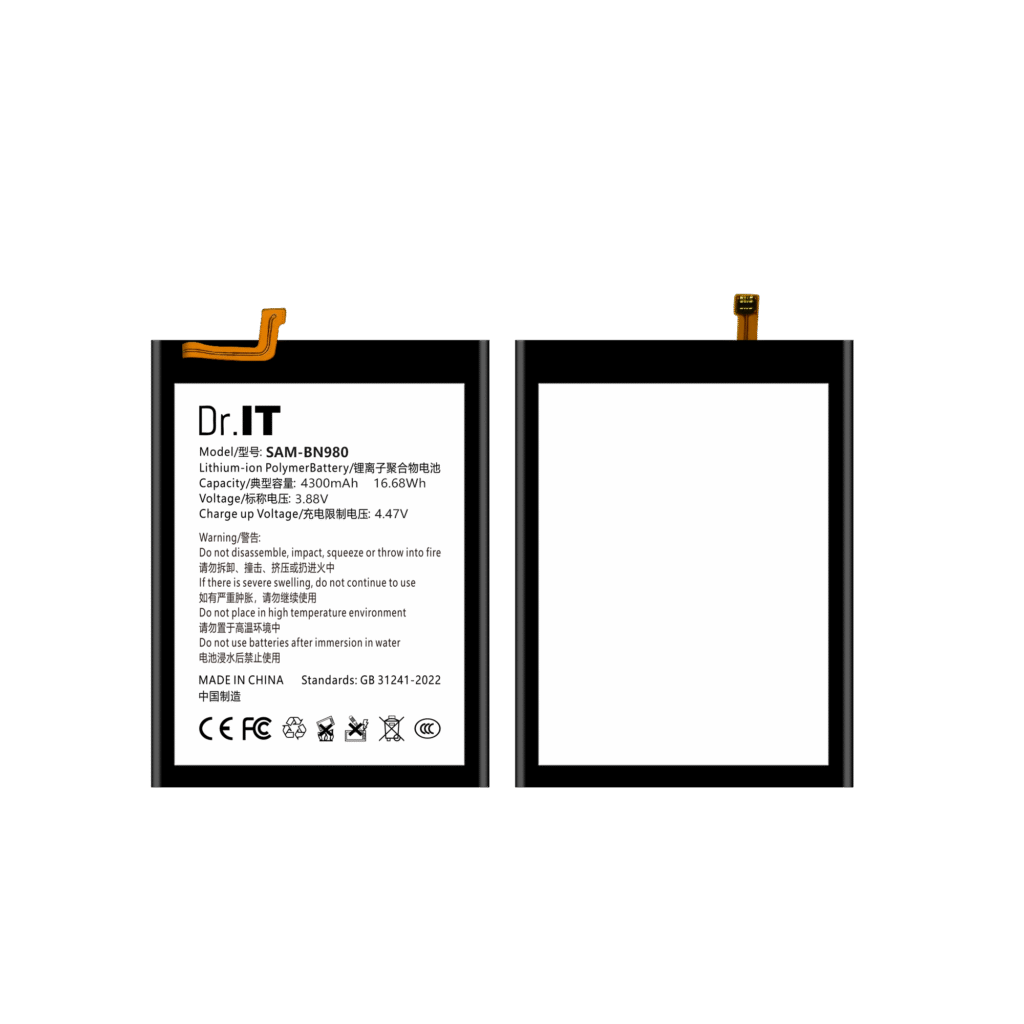
- What is printed on it. Which values are legible on the unit itself: the artwork model text, the label capacity, the nominal voltage, the batch or lot reference. The battery label guide sets out the fields, and it is worth checking legibility on the physical unit rather than assuming it from a photograph.
- Which reference the unit belongs to. One box can hold several references, which is efficient in freight and useless at the bench if the units are not separated.
- Whether the unit is separable. Can a technician take one cell from a multi-pack without opening or damaging the rest, and does the packaging keep the remaining cells protected and identified?
For an OEM or private-label project the unit is part of the artwork rather than a detail of it, and the packaging artwork approval checklist is where the box, the label and the print are settled before production. The OEM specification sheet guide covers the wider specification a project needs.
Match the unit to the workflow
Three situations pull in different directions.
- A workshop that fits cells as jobs come in usually cares most about handling time and legibility. A unit that arrives complete and identifiable at the bench removes two failure points: the missing adhesive and the unlabelled cell.
- A distributor reselling to shops cares about the outer pack: how many units per carton, whether they are separable, how a unit is identified in a retail setting, and how the outer packaging survives being opened and re-closed in transit.
- A distributor who consolidates several references into one shipment cares about separation and about how a fault is traced back. Mixed cartons are efficient until one unit is returned and the batch cannot be established.
The stock planning guide handles the quantity side of the same decision, because the unit determines how deep a holding has to be to cover the same demand.
Traceability has to survive the packaging
A batch reference on the outer carton is only useful if it can be connected to the individual unit that failed. Two situations commonly break that link: a multi-pack that is split before it reaches the bench, and a unit that is re-bagged by the workshop. The practical answer is cheap — keep the batch reference printed on the unit itself, or on the packaging that stays with the cell until it is fitted — and it protects both the buyer and the supplier.
This is the same chain that the receiving and after-sales records guide sets out, extended one step further into the packaging, and it is what makes a claim workable under the returns procedure when something comes back.
Judge the unit on cost per fitted cell
Unit price is the least useful comparison, because it ignores the labour the unit consumes and the stock the unit ties up. Two comparisons are more honest: the cost per cell actually fitted, including the time to prepare and the consumables consumed, and the working capital tied up per week of demand. A lower unit price that has to be opened, separated and re-stocked at the bench can be the more expensive option once labour is counted.
The device list guide covers how to build the demand side of that calculation, and the mixed-model order list shows the format that keeps each reference and each unit on its own line.
Ten questions for the enquiry
These are the points to settle before the first order, in the same structured way you would settle the reference itself.
- What is the buying unit for this reference, and what is in it?
- Which values are printed on the unit, and which are on the outer packaging?
- Where is the batch or lot reference printed?
- Can units be separated and re-closed without damaging the remaining cells?
- How many units per carton, and how many cartons per shipment?
- What is the minimum order quantity per reference and per order?
- Does the unit count toward your stock as one item or as several?
- What is returned if a unit is faulty, and what evidence is needed?
- Which units and formats are available for private-label packaging?
- Which document set accompanies the shipment?
Send the same file to every supplier, with one line per reference and one line per unit, because that is what makes the answers comparable. The wholesale RFQ template carries that structure, and for reference the catalogue pages for individual references show the artwork text and label values that belong on each line — for example the BN980 (4300 mAh, 3.88 V) and the BN985 (4500 mAh, 3.88 V) are listed on the battery catalogue with the same label fields.
Availability, order minimums, delivery timing, after-sales conditions and the document set for your shipment are confirmed in writing for each enquiry, and the packaged references in this catalogue are listed under the packaged, packaged iPhone and packaged vivo categories. Send your model list, quantities and destination through the DoctorIT quotation page, and start from the wholesale batteries page if you are setting the terms up for the first time.
Battery installation and handling should be carried out by trained technicians, and lithium-ion batteries must be stored, transported and disposed of in line with the applicable local rules and the carrier’s requirements.