

November 18, 2026
What goes into a battery price: the costs behind the unit price
A unit price is the visible part of a battery deal, and for a distributor it is usually the part that gets set first and examined last. What sits behind it — the carton that does not fill a container, the duty that depends on how the goods are described, the small percentage of units that arrive damaged, the stock that has to be held between two order cycles — is what decides whether the business earns anything. This guide is for distributors and trade buyers of replacement phone batteries who sell on to repair shops and parts counters. It walks through the cost components of a battery order, what each one depends on, how to build a landed cost per unit rather than a purchase price, and the questions that have to be answered in writing before the price can be set with confidence. It contains no prices from any supplier: unit prices, minimums, terms and freight costs are confirmed per enquiry, and the method here works on your own quotes and your own records.
The components that sit behind the unit price
| Component | What it depends on | Where it is confirmed |
|---|---|---|
| Cell cost | The reference, the capacity tier and the artwork family — a packaged retail unit and a bulk cell are not the same product | The quotation |
| Buying unit and carton quantity | How many pieces one carton holds, and whether a mixed order can share a carton | The quotation and the packing list |
| Freight | Volume rather than weight, because a lithium cell is dense and light; also the number of cartons | The forwarder’s quotation |
| Duty and tax treatment | How the goods are described and classified on the paperwork | The broker’s answer, in writing |
| Breakage and shortage reserve | How much damage the route normally causes, and how that was measured rather than estimated | Your own delivery records |
| Stock holding | How many days of cover the references carry, and what the cash in that stock costs | Your own stock file |
| Payment terms and currency | How long the money is out, and what happens to the price if the currency moves | The quotation and the invoice terms |
| After-sales and returns | What proportion of units come back, and what happens to them | Your own claims history |
Two of those rows are the ones most often skipped, and both are measurable rather than speculative. Stock holding is measurable because the cover per reference is already in the stock file, and the stock planning guide covers how that cover is set. Breakage and shortage is measurable because the receiving records say how many units arrived short or damaged on past shipments, and the receiving and after-sales records guide covers what has to be written down for the number to mean anything.
Unit cost is not landed cost
The calculation that matters is the one a distributor can do at the moment the order is placed: everything the goods will cost by the time they can be sold, divided by the number of sellable units that will arrive. Freight charged by volume rather than by weight is the item that most often surprises people, because a carton of lithium cells is light for its size and the space it takes is what is being paid for. A mixed order that shares a carton across references is therefore cheaper per unit than the same units split across several cartons, which is the practical reason the buying unit guide treats the carton quantity as a commercial decision rather than a packing detail.
Duty depends on how the goods are described, which is a question for the broker rather than for the supplier, and it is one of the questions in the import and broker questions guide. An answer that arrives before the invoice is signed is worth more than a discount negotiated afterwards, because the discount does not change the duty and the freight.
What the supplier’s quote does not tell you
A quotation gives a unit price, a minimum quantity and a validity period. It does not tell you how quickly a repeat order moves, what proportion of the last shipment arrived short, whether the carton quantity changes with the mix of references, or what the after-sales route actually costs in time. Those four things decide whether the price is a price or the beginning of a price.
The quote comparison guide covers how two quotations are compared when the unit prices differ, and the repeat order guide covers how the terms are captured once so that the next order is a copy rather than a re-negotiation. What belongs in the file, in other words, is the whole cost picture rather than the number on the quotation.
Setting the price you sell at
Once the landed cost per sellable unit is known, the selling price is a decision rather than a calculation, and it is worth making it explicitly rather than by applying a percentage to whatever the last quote happened to be. Three things usually determine the answer.
- What the reference does in your business. A reference that carries the volume can carry a thinner margin and still matter more than a high-margin reference that sells twice a year. The assortment guide covers how the references are grouped for this purpose.
- What you promise about the goods. If the reference is sold with a replacement promise to the customer, that promise has a cost in your reserve. If it is sold as it is, with the printed values on the label and nothing added, the cost is lower and the claim is simpler.
- What the market will bear for that specific reference. Not the market in general, but that reference, in your customers’ devices, at the price they will pay without going to somebody else. The quote comparison guide is useful here too, because the comparison that matters is not always between two suppliers of the same cell.
The packaged retail family is a special case, because the box is part of the unit and the unit is what goes on a counter: the packaged and bulk guide covers what differs between the two families, and it changes what a distributor is selling in each case.
Put the cost picture in the file
The record that makes this repeatable is short: for each order, the unit price, the carton quantity, the freight, the duty treatment, the payment terms, the number of units received short or damaged, the number of days the stock was held, and the number of units returned. With those, the landed cost per sellable unit can be recalculated after the fact instead of being argued about in advance, and the next price is set on the real number.
Nothing in that record is a secret: it is the same information the RFQ template asks for on the way in, plus what the receiving and returns records already capture on the way in and the way back. The returns procedure guide covers what has to be in hand for a claim to be settled, which is the point at which the reserve either was enough or was not.
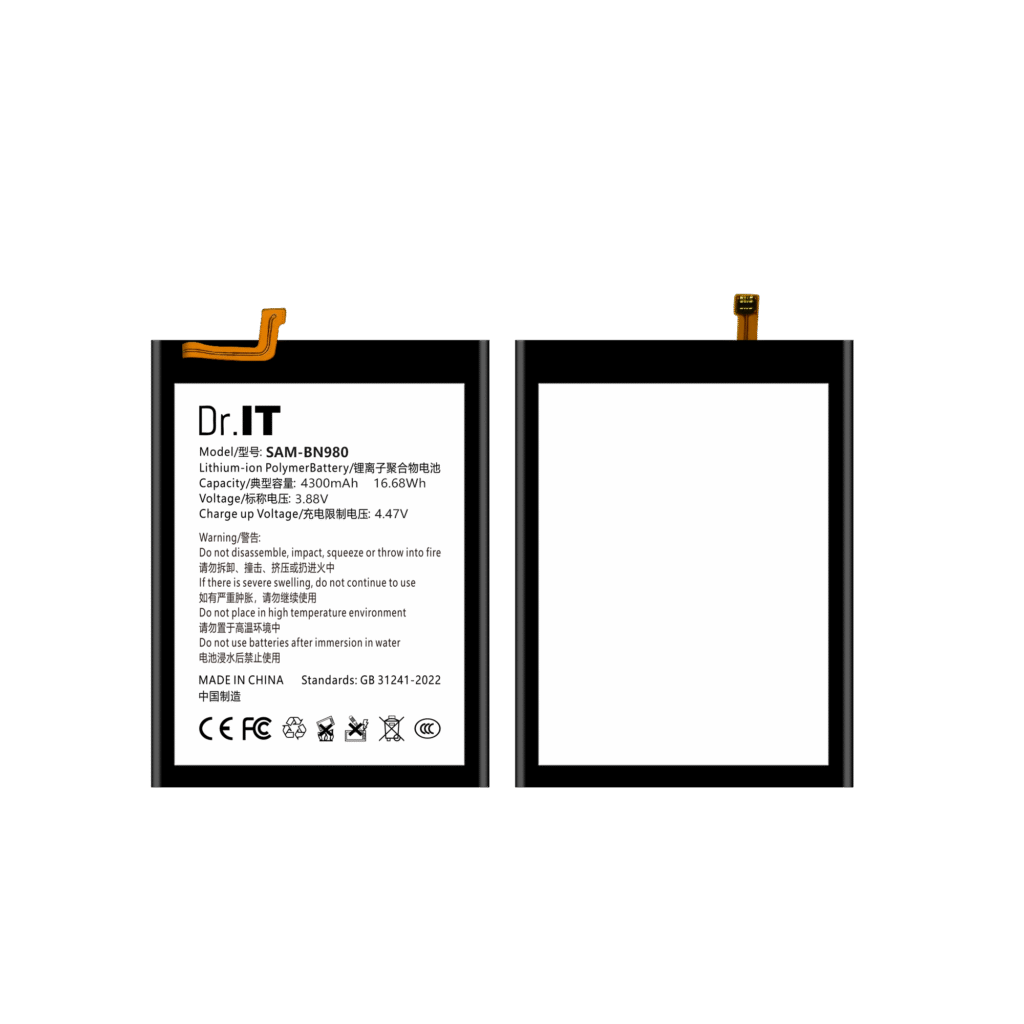
Product pages such as the BN980 (4300 mAh, 3.88 V) and the BN985 (4500 mAh, 3.88 V) publish the artwork model text and the printed values for their references so a quotation and an order line can be written from the page, and the battery catalogue carries the rest of the range by brand and capacity tier. Send your reference list, quantities and destination through the DoctorIT quotation page, and start from the wholesale batteries page if you are setting the terms up for the first time.
Battery installation and handling should be carried out by trained technicians, and lithium-ion batteries must be stored, transported and disposed of in line with the applicable local rules and the carrier’s requirements.