

November 17, 2026
Retiring a battery reference: how to wind down an old model without losing the customer
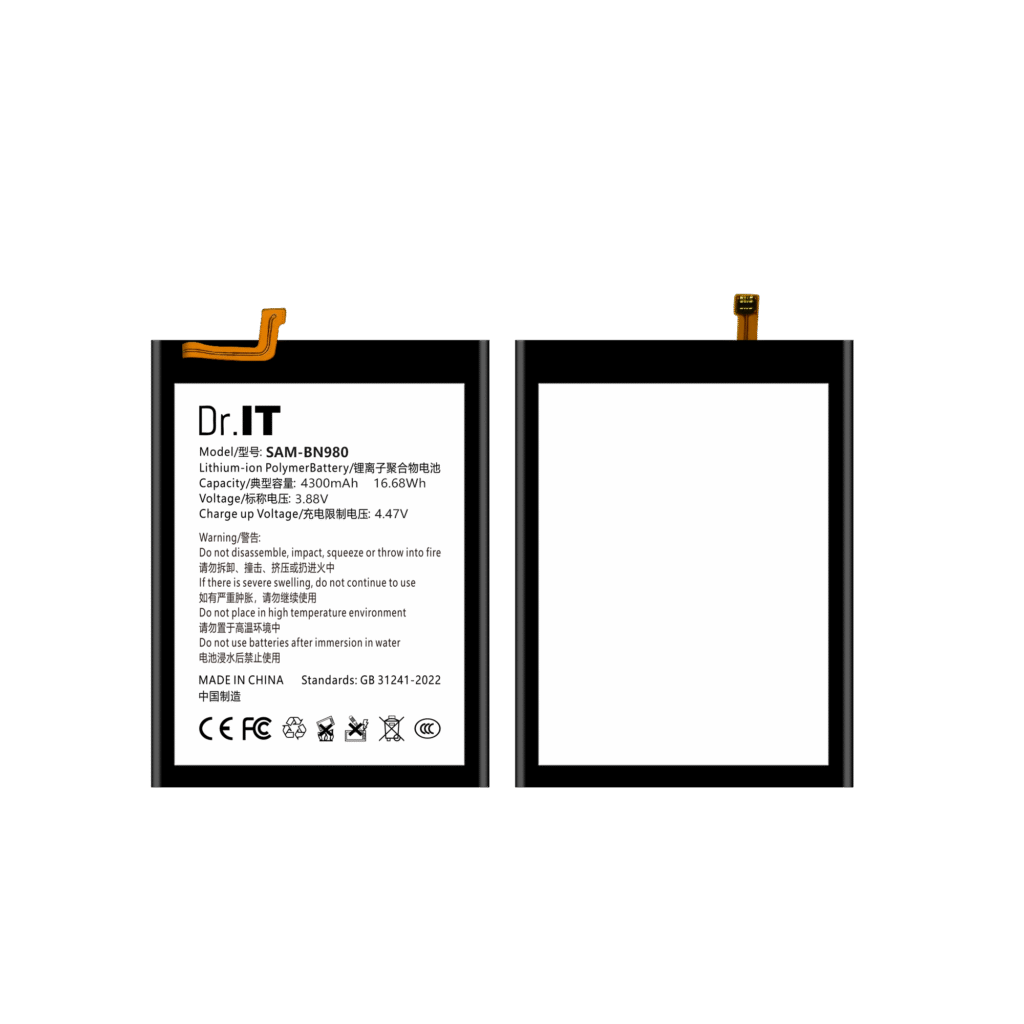
Every catalogue eventually loses a reference. A device generation ages out, a supplier stops making a cell, or a reference is superseded by one that fits more of the current devices. The hard part is not removing the page; it is doing it in a way that does not cost the customer, and that leaves a record somebody can still read a year later. This guide is for repair businesses, distributors and OEM buyers of replacement phone batteries, and it covers the three different situations that get called “retiring a reference”, what to do with the stock that is already in the warehouse, how to tell a customer about a substitution, the fields both the old and the new reference have to be checked on, and how the catalogue itself should behave when a reference’s artwork can no longer be verified. Every example used here is read from the original artwork published for that reference on this site, and calculated values are labelled as calculated.
Three different things called retirement
| Situation | What actually happened | What has to be true afterwards |
|---|---|---|
| The reference is discontinued | The cell is no longer produced, and no further stock will arrive | Existing stock is sold as the reference it is, the substitution is communicated, and the page states the position |
| The artwork changed | The same catalogue code is now produced with different printed values or different packaging | Both versions are recorded, the changeover is dated, and the order file can say which one it means |
| A replacement reference supersedes it | Another reference covers the same devices | The substitution is checked field by field, and the customer is told what differs |
The second case is the one that gets confused with the first, and it is the reason the artwork changeover guide exists: a code that no longer carries the same printed values is not the same product, even though the catalogue still calls it by the same name. When the artwork, the label values and the packaging all move together, that is a changeover and it has to be dated. When only the production has stopped, that is a retirement.
Stock that is already in the warehouse
Stock of a retired reference is still stock that was approved, and the rule that protects both the buyer and the customer is simple: it is sold as what it is. It is not relabelled under a new reference, its artwork text is not edited to match a new catalogue entry, and it is not described in a quotation with the new reference’s values.
That rule exists because the record is what a claim, a return and a customer’s own stock system are all checked against. If the old stock was sold against the old values and the paperwork says so, everything downstream can be reconciled. If it was quietly presented as the new reference, then the invoice, the label and the file disagree, and that is exactly the situation the guide to what a battery label proves warns against: a value that has been adjusted into tidiness is a value nobody can trace.
Running the remaining stock down is a commercial decision rather than a technical one, and it should be made on a fixed date rather than whenever the reference feels awkward. The stock planning guide covers how the reorder point and the cover for the references that carry the volume are set, and the assortment guide covers how a reference is retired without quietly deleting it from the assortment decision.
How to tell a customer about a substitution
A customer hears about a substitution when they ask for a reference, so the conversation happens at order time. What makes it work is that the two references are compared in writing, on the same fields, rather than described in adjectives.
- Name the old reference and the new one, and give the artwork model text for both.
- Give the capacity, the nominal voltage, the printed energy and the charge-up voltage for both, as printed.
- State the packaging family for both, since a bulk cell and a packaged retail unit are not interchangeable.
- State the fitment position, and whether it has been confirmed on a sample.
- Record the date and who the change was communicated to.
The fields in steps one to four are the same ones that belong on the order line, and the reason they matter is that a substitution can match on capacity and still differ on charge behaviour. The charge-up voltage guide covers what that difference does on a device, and the artwork prefix guide covers why the artwork text is the reliable identifier when a code alone is not.
When a reference’s artwork can no longer be verified
Occasionally a reference cannot be described accurately at all, because the artwork attached to it does not carry that reference’s model text. This happens: an image is attached to the wrong catalogue entry, or a page inherits an image that belongs to a neighbouring reference. In that case the honest answer is not to publish a plausible-looking specification, because a specification that cannot be traced back to artwork is a guess wearing a table.
What this site does in that situation is state the position on the page — that the artwork attached does not match the reference, so the capacity and voltage are not published as verified values until the correct original artwork is available. The same principle applies to a distributor’s own catalogue: an entry with unverified numbers is a claim that will eventually be checked by somebody, and it is better to have a page that says what is known.
The supplier catalogue data checklist covers what to ask a supplier when the artwork cannot be read, and the label field guide covers the fields that have to come from the artwork rather than from a data sheet.
Keep the retirement on the record
Whatever happens to the reference, five things should be written down and kept: the date; the reference and its artwork model text; what happened (discontinued, artwork changed or superseded); what was shipped to whom after that date; and where the remaining stock was. That record is what makes the next conversation with a customer — six months later, about a battery that is now old stock — answerable.
Two adjacent topics belong with it. The first is the shipment itself: if a retirement happens while stock is in transit, the paperwork still has to name the reference that was ordered, and the import and broker questions guide covers what has to travel with the goods. The second is the damaged unit: if a cell from a retired reference arrives damaged, the record of it still has to name that reference, which the damaged battery handling guide covers.
Reference pages such as the BN980 (4300 mAh, 3.88 V) and the BN985 (4500 mAh, 3.88 V) publish the artwork model text and the printed values for their references so the order line and the retirement record can be written from the page, and the battery catalogue carries the rest of the range. Send your model list, quantities and destination through the DoctorIT quotation page, and start from the wholesale batteries page if you are setting the terms up for the first time.
Battery installation and handling should be carried out by trained technicians, and lithium-ion batteries must be stored, transported and disposed of in line with the applicable local rules and the carrier’s requirements.